
How human behavior shapes models, decisions, and insights.
Why This Topic Matters
Data isn’t neutral. people create it, shape it, and interpret it. Understanding psychology
makes data science smarter, safer, and more transparent.
Psychology Inside Data Science
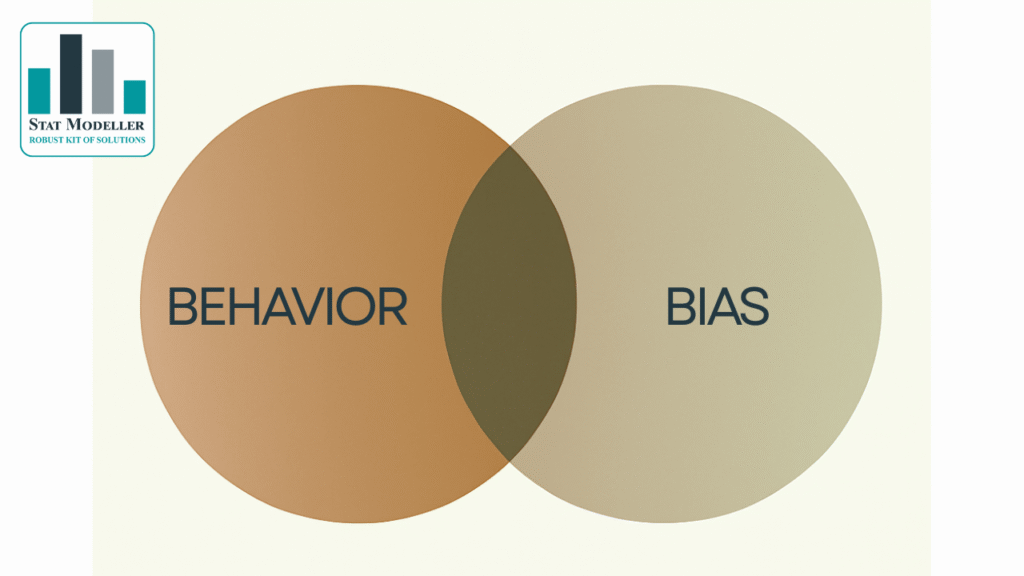
There are two hidden layers:
- Understanding human behavior through data
- Managing human bias inside the workflow
Understanding Behavior Through Data
Data doesn’t just show numbers. it reveals patterns in how people think, act, and decide. By analyzing user interactions, we uncover meaningful insights such as:
- What people prefer and why
- How they make decisions
- What habits reveal about their needs or emotions
- How people react to choices, risks, or designs
In short: Data helps us decode the human story behind every click, choice, and action.
Hidden Bias in Data Science
Even with advanced tools, human judgment still shapes the data process, which can introduce biases like:
- Favoring information that matches our beliefs
- Using incomplete or unrepresentative data
- Judging results based on the first number we see
- Misinterpreting patterns through assumptions
Bias doesn’t come from the model. it starts with us.
Why Bias Matters
When bias enters the process:
- Predictions become unreliable
- Insights mislead businesses
- Some groups are underrepresented
- Decisions become unfair
Understanding psychology reduces these risks.
Bringing Psychology Into Data Work
To make data science smarter and safer:
- Test assumptions before building models
- Use unbiased sampling methods
- Question “why” behind patterns
- Validate interpretations with real behavior
- Combine data understanding with human psychology
Good models require good judgment.
Conclusion
When we understand behavior and actively manage bias, we create:
- Fairer and more ethical models
- Insights that reflect real human patterns
- Decisions that are accurate, honest, and meaningful
Psychology isn’t a “nice-to-have.”
It is a fundamental pillar of responsible, modern data science. shaping how we collect, interpret, and act on data.
Written by
Manshi Gorasiya | Data Science Intern
Stat Modeller
Excellent!